
Slab leak water damage in Baytown, TX
A slab leak stays hidden under the concrete until it shows up as a warm spot, a damp patch, or a strange water bill.
Call Now 24/7(832) 688-652224/7 emergency line. Free estimates from local pros.
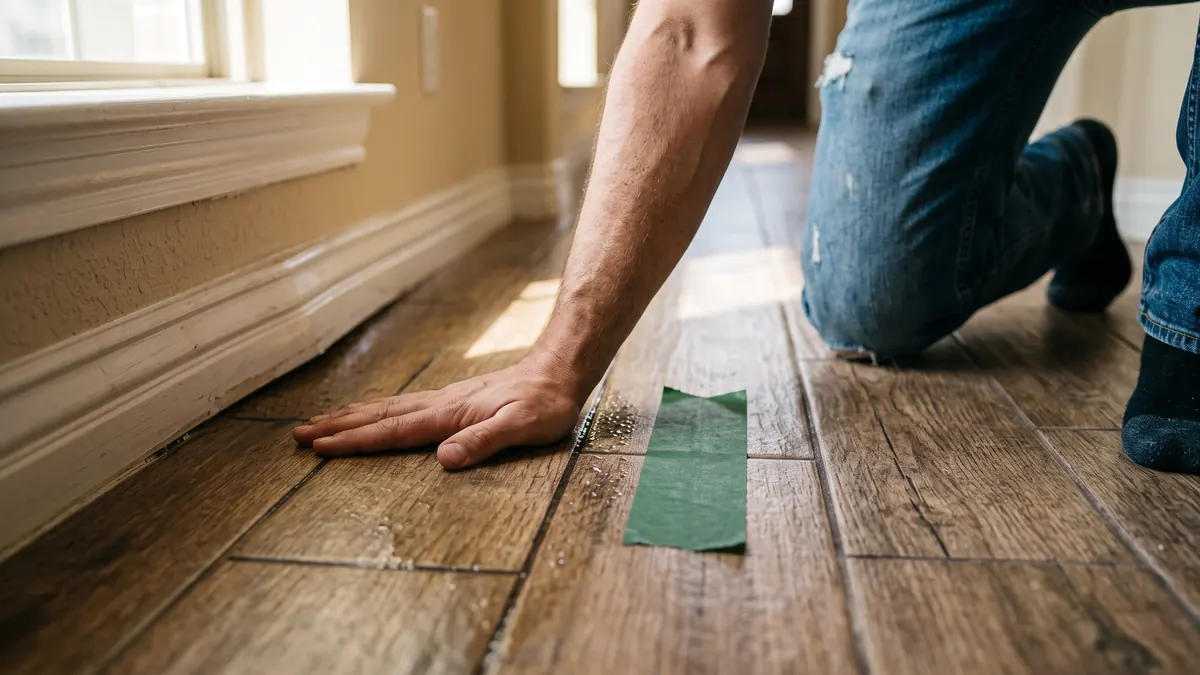
Almost every Texas house sits on a slab, and every slab has water and drain lines running underneath it. When one of those lines fails, the water doesn’t spray into a room. It works its way up through the concrete instead, showing up as a warm spot, a damp patch, or a water bill that doesn’t make sense.
What your house is already telling you
A slab leak rarely announces itself with standing water. Watch for a warm patch on tile or wood flooring that stays warm no matter the room temperature, a water meter that keeps spinning with every fixture in the house turned off, or a water bill that jumped without an obvious reason. A musty smell in one spot, or flooring that’s started to lift or crack along one seam, are worth a second look too. The slab leak signs guide untangles each one in more depth, tier by tier.
Your house’s age says more than its address does
Baytown’s housing spans a full century, from the Humble oil-era core that took shape starting in 1919 to subdivisions still going up near I-10 today. That range matters underneath the slab. The oldest homes can predate the copper-plumbing era entirely, and newer construction almost always runs PEX instead. Guessing at your specific pipe material by neighborhood name is a bad bet either way. The safer read is general: older usually means more unknowns, newer usually means fewer, and a plumber confirms the actual material once they’re on site.
This is where “sudden” gets complicated
Insurers generally treat a fast, obvious pipe burst as an accident, the kind a standard policy is built to pay for. A slab leak complicates that test, because the same leak can run for weeks or months before it ever gets loud enough to find. Some adjusters still treat a confirmed slab leak as sudden and accidental. Others ask hard questions about how long it went unnoticed, especially if warning signs were sitting there the whole time. There’s no single answer, and the honest version is that it depends on your policy and your adjuster. The insurance claim guide weighs what documentation actually helps once you’re having that conversation.
What the plumber’s report is actually built from
A slab leak report usually answers three questions: where the break sits, how sure the plumber is about that spot, and how they plan to reach it. Work backward through those and the process makes more sense than a list of equipment names ever would. The access plan gets decided last. It’s usually small, a few square feet of tile or concrete rather than an entire floor, once the other two answers are already solid. Getting to that point takes confirmation first. A test on the isolated section of pipe proves the exact spot before anyone commits to cutting anything. And that spot came from listening in the first place. Sensitive gear picks up water moving through the break. That narrows a whole house down to a few feet, before the test ever happens.
One leak, three different toolboxes
A slab leak usually touches three separate trades before it’s finished, not two. Detection comes first: whoever pinpoints exactly where the break sits and how deep. A plumber handles the repair itself, closing the leak, whether that means a small access cut, a reroute above the slab, or a new line run a different way entirely. Neither of those trades touches what the water already did to your flooring, cabinets, or baseboards on the way up. That part is water damage repair territory: matching materials, drying what got wet, and putting the room back together. Sometimes one company wears two of those hats. The work itself still splits three ways.
Between the plumber and the painter
Finding and fixing the leak itself is plumbing work, and that call is yours to make first. What that water touched on its way up, the flooring, the drywall, the cabinet base, is a different job. That part is ours to line up. Once the leak’s confirmed stopped, tell us the basics. A local company takes over the water-damage half from there, while the plumber sticks to the pipe. You don’t have to wait for every answer before you call. Even a warm spot and a guess is enough to start.
Common questions
Does insurance usually help with a slab leak?
It depends on how your policy and adjuster read the timeline. A slab leak found and fixed quickly sometimes gets treated like any other sudden pipe failure. One that ran quietly for months can draw more questions, since insurers weigh how long the damage went unaddressed. The only honest answer is to ask your specific carrier once you know what happened.
Will they have to break up my floor to fix it?
Not always. Plumbers sometimes reroute the line above the slab instead of repairing the exact break, which skips cutting concrete entirely. Other times, tunneling under the slab from outside the foundation reaches the pipe without opening the floor at all. Which option makes sense depends on where the leak sits and what the plumber finds on site.
How does anyone find a leak under solid concrete?
Sensitive listening gear picks up water moving through a break in the line, which narrows the search to a small area of the house. From there, a test on that section of pipe confirms the leak sits exactly where the sound pointed, before anyone commits to opening the floor.
Does the same company find the leak, fix it, and dry the damage?
Sometimes, but the underlying work still splits into different trades: locating the leak, plumbing the repair, and drying or replacing what the water damaged. One business might cover two of those steps under one roof. All three still need to happen, no matter how many calls it takes to get there.
Related pages
Appliance leak cleanup
Most water heaters warn you first, a rust tint, a damp ring, a slow drip, before they actually let go.
Learn more →Burst pipe cleanup
When a pipe splits, water goes everywhere at once, most often here during a hard freeze.
Learn more →Ceiling water damage
By the time you see a stain on the ceiling, the water that made it already finished moving.
Learn more →Commercial Water Damage
Baytown's commercial water damage runs through strip retail, offices, and warehouses, not the refineries next door.
Learn more →Talk to a local pro now
We answer 24/7. One call gets a Baytown crew moving on your water damage, with a free estimate and help with your insurance claim.
Call Now 24/7(832) 688-6522Free estimates. No obligation to hire.