
Flood cleanup in Baytown, TX
Water that reaches your house from outside brings contamination and a coverage question a burst pipe never does.
Call Now 24/7(832) 688-652224/7 emergency line. Free estimates from local pros.
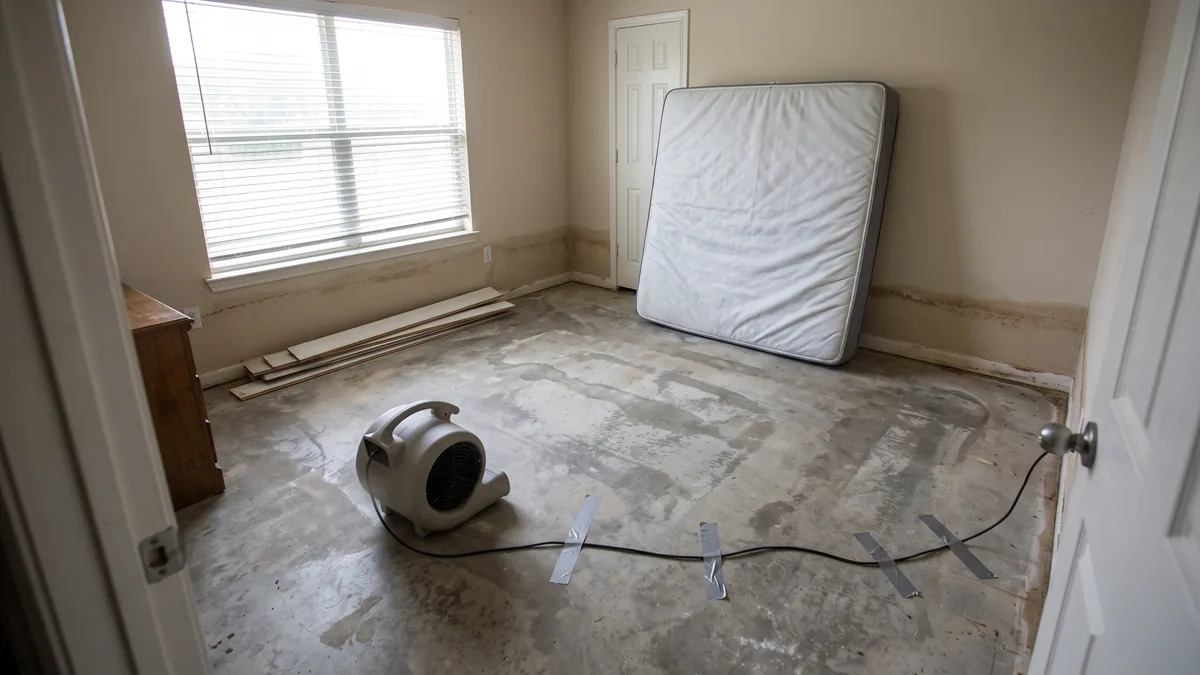
A pipe that bursts inside your house and a bayou that leaves its banks both end with water on your floor. Only one of them is usually a homeowners insurance claim. Flood cleanup deals with the other one: water that arrived from outside, carrying whatever it crossed to get to you.
The street outside can drain by morning. Water that got into your baseboards and drywall doesn’t work the same way. It sits there until something pulls it back out, and that gap between what looks fine and what still isn’t is worth a call. Tell us what you’re seeing, and we’ll take it from there.
Goose Creek and Cedar Bayou carry the risk
The city’s own floodplain rules track two waterways as Baytown’s flood risk: Goose Creek and Cedar Bayou, plus their smaller tributaries. Hurricane Harvey showed why, in August 2017: floodwater reached roughly 4,600 homes across the city. A rain gauge near Cedar Bayou logged 51.88 inches during the storm, a total the National Weather Service flagged as a record in real time. A fuller count released later by the National Hurricane Center put Harvey’s highest total even farther east, near Nederland, but the Cedar Bayou number is still one of the most-cited figures from that week in Baytown.
Outside water brings more than water
Water that crosses a yard, a street, or open ground on its way to your house picks up whatever it touches: fuel, fertilizer, sometimes sewage from an overwhelmed system. Restoration pros classify it as category 3, the most contaminated tier there is. That changes what gets cleaned and what gets thrown out, and it calls for more caution than a clean-water leak from a supply line ever does. If the source turns out to be a backed-up drain instead of a bayou or open ground, sewage cleanup weighs what changes once sewage itself is the contaminant.
Homeowners insurance and flood insurance aren’t the same policy
Insurance companies treat your exterior wall like a border. Break something inside it, a pipe, a water heater, a fitting under a sink, and your regular homeowners policy is usually the one that responds. Water that comes in from outside that border, a bayou past its banks or surge off the bay, is a different kind of loss, and standard homeowners coverage generally excludes it. Covering that kind of water takes a separate flood policy, bought ahead of time, either federal (the NFIP) or from one of the private flood carriers. The homeowners insurance guide draws the line between the two in more detail than one flood-cleanup page can.
If the damage bill climbs past half of what your home was worth before the flood, Baytown’s floodplain ordinance can kick in. It can add rebuilding requirements on top of whatever the repair itself costs.
What usually can be saved
How long something sat wet, and what it’s made of, decide more than most people expect. A rug pulled out within a day often comes clean. The same rug left wet a week usually doesn’t, no matter how good the cleaning gets. Whether something is worth saving is easier to judge in person, once someone has actually looked at what got wet and for how long. How contaminated the water was matters too. The water damage categories guide weighs that question in more depth.
Two maps decide this
One of them is a real map: FEMA’s flood map, which shows how exposed your street actually is. The other is your insurance policy, and reading it works about the same way, if you know where to look. You can check the flood map online any time, in a few minutes. The policy is worth reading before the next storm, not during one.
Common questions
If my homeowners policy won't pay for this, is there a policy that will?
Not automatically. Standard homeowners policies generally exclude water that rises from outside, which is what flood cleanup deals with. Coverage for that kind of water comes from its own policy, either FEMA's flood program (the NFIP) or a private flood carrier, and it has to be in place before the water arrives.
What actually happens to floodwater once it's inside the house?
It keeps moving until something stops it. Floodwater soaks into drywall, carpet, and cabinets the same way any water does, but it can also carry contamination from wherever it crossed on the way in. That combination is why floodwater cleanup usually means more caution, and sometimes more discarded material, than a clean-water leak.
Which of my things are worth trying to save?
That depends on what it's made of and how long it sat wet, more than what it looked like before. Something pulled out within a day has a much better shot than the same item left wet for a week. The honest answer is that it's easier to judge in person, once someone has actually looked at the specific piece.
Is water backing up through a drain the same thing as flood damage?
Not exactly, though the two can look similar once water is on your floor. Flood damage generally means water that came from outside, while a drain backup usually means contaminated water finding its way back into your house from your own plumbing or the city's system. Either way, it's water that calls for more caution than a clean supply-line leak.
Related pages
Appliance leak cleanup
Most water heaters warn you first, a rust tint, a damp ring, a slow drip, before they actually let go.
Learn more →Burst pipe cleanup
When a pipe splits, water goes everywhere at once, most often here during a hard freeze.
Learn more →Ceiling water damage
By the time you see a stain on the ceiling, the water that made it already finished moving.
Learn more →Commercial Water Damage
Baytown's commercial water damage runs through strip retail, offices, and warehouses, not the refineries next door.
Learn more →Talk to a local pro now
We answer 24/7. One call gets a Baytown crew moving on your water damage, with a free estimate and help with your insurance claim.
Call Now 24/7(832) 688-6522Free estimates. No obligation to hire.